
Strengthening enterprise connectivity West Africa requires physical route diversity, cross border terrestrial corridors, and high capacity data centre backhaul to protect business continuity against ground and subsea cable disruptions. These three priorities stood at the centre of industry discussions during Africa Tech Festival, held from 16 to 19 November 2026 at the Cape Town International Convention Centre in Cape Town, South Africa.
Across boardrooms in Lagos, Abuja, Accra, and Dakar, the conversation around digital infrastructure has changed. For years, corporate technology teams focused mainly on securing basic internet access. Today, as banking platforms, cloud applications, and public services run continuously, Chief Information Officers and carrier partners are asking a much more practical question: how does your network stay online when ground disruptions happen?
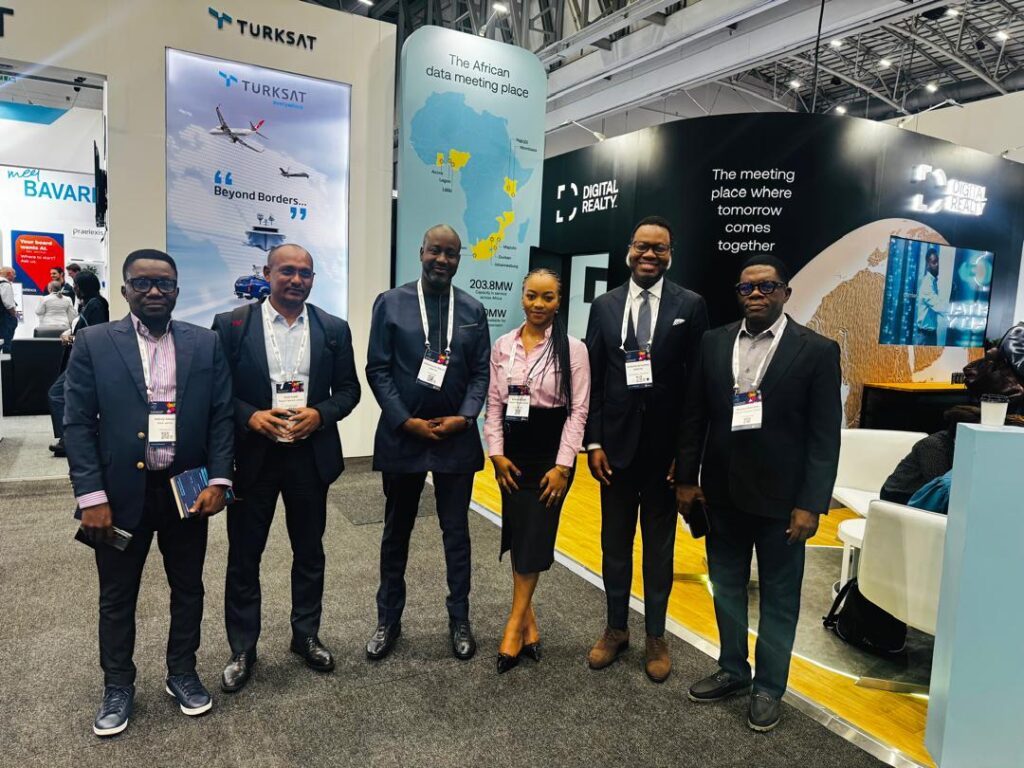
Representing Phase3 Telecom across the main exhibition from 17 to 19 November, our delegation met with regional operators, data centre leaders, and technology partners to align on what organizations managing enterprise connectivity West Africa need next from their network infrastructure. Rather than treating industry conferences as routine networking trips, we use them to test emerging customer demands against our physical infrastructure roadmap.
1. Physical Route Diversity Protects Enterprise Connectivity West Africa
Submarine cable outages and local road construction cuts have repeatedly exposed the operational risks of relying on a single underground fibre path. Enterprise buyers and regional internet providers are no longer looking only at advertised bandwidth speeds. They are examining how a network is physically built before they commit to a contract.
This reality reinforces the practical advantage of aerial optical fibre for enterprise connectivity West Africa. By deploying fibre along national high voltage electricity transmission corridors across more than 17,000 kilometres, Phase3 Telecom avoids the road excavations, soil erosion, and ground damage that frequently interrupt buried cables. Licensed as a National Long Distance Operator by the Nigerian Communications Commission, our aerial backbone provides financial institutions, energy companies, and businesses operating across multiple locations with steadier uptime and lower operational risk.
2. Regional Terrestrial Corridors Are Unlocking Cross Border Trade
Commerce across the sub region depends on direct, low latency data routes between neighbouring economic hubs rather than sending traffic through distant international loops. Conversations with regional carriers in Cape Town highlighted growing commercial demand for continuous overland capacity linking major coastal and inland markets.
When cross border traffic stays on dedicated terrestrial routes within West Africa, businesses experience faster application response times and more predictable network performance. Through strategic regional alliances, Phase3 continues to strengthen terrestrial corridors linking Nigeria with neighbouring West African markets, giving wholesale carriers and multinational organizations dependable enterprise connectivity West Africa across borders.
3. Data Centre Growth Depends on Strong Terrestrial Backhaul
Investment in carrier neutral data centres and local cloud environments across Africa is moving quickly. Even the most advanced facility, however, relies on the terrestrial fibre routes connecting it to enterprise offices, branch networks, and international gateways.
Our discussions with global data centre and cloud ecosystem stakeholders at the event centred on building stronger backhaul and interconnection pathways. Pairing carrier neutral colocation environments with long distance terrestrial transmission and continuous Network Operations Center monitoring ensures that cloud hosted workloads supporting enterprise connectivity West Africa perform reliably every day.
Moving from Conversation to Execution
The relationships reinforced at the Cape Town International Convention Centre reflect a shared goal across the industry: building interconnected, fault tolerant infrastructure that keeps African businesses running without interruption. Buyers evaluating network partners increasingly look for proven physical resilience, clear service accountability, and transparent governance.

If your organization is reviewing its primary or backup architecture for enterprise connectivity West Africa, The Phase3 Telecom commercial and solutions engineering teams are ready to help you plan a resilient transmission strategy. You can also contact our commercial team to start the conversation.

